Most Oregon homeowners don't think about their HVAC system until it stops working — usually at the worst possible time, on the coldest or hottest day of the year. The better approach is to catch the warning signs early and plan the replacement during shoulder season when prices are lower and installers are available. Here are the seven signs that say it's time to replace rather than repair — from a licensed Oregon HVAC contractor who sees these patterns every week.
Sign 1: Your system is over 15 years old
HVAC equipment is designed for a working life. Gas furnaces typically last 15–20 years. Air conditioners last 10–15 years. Heat pumps last 12–15 years. If your Oregon home still has the original HVAC from when it was built in the late 1990s or early 2000s, you're on borrowed time. Replacing proactively (when the system is still running) is always cheaper than replacing reactively during an emergency — both because emergency premium pricing exists and because you lose food, pipes, or comfort during the outage.
Sign 2: Your energy bills are climbing and you can't explain why
A 12-month comparison is the honest test. If this winter's heating bill is 25% higher than last winter's for the same thermostat settings and same Oregon weather, your system has lost efficiency. Dirty coils, failing capacitors, refrigerant leaks, and worn-out blower motors all reduce efficiency gradually. By the time the bill notices, the system has often lost 30–40% of its original efficiency. Replacement usually pays back the premium within 3–5 years at current Oregon electricity rates.
Sign 3: Repairs are adding up
The 50% rule: if the cost of a repair exceeds 50% of the cost of a replacement, replace. A $2,400 compressor replacement on a $5,000 heat pump is a waste — the rest of the system has the same 12–15 years of wear. Similarly, if you've paid for three separate HVAC repairs in the last 18 months, the system is telling you it's done. Replace during shoulder season (April or October in Oregon) for the best Oregon HVAC pricing and fastest installer availability.
Sign 4: Loud banging, grinding, or whistling
HVAC systems should be quiet. A slight hum from the outdoor unit is normal. Actual banging, grinding, or sharp whistling during operation is always a warning. Banging usually indicates a loose compressor mount or failing blower wheel. Grinding is worn bearings. Whistling is ductwork leakage or a failing fan. Any of these can progress to complete failure within weeks. Get an inspection the day you notice any of them.
Sign 5: Uneven heating or cooling across rooms
If your upstairs is consistently 5–8°F warmer than your downstairs in summer (or colder in winter), your HVAC system either is undersized for your Oregon home, has duct leakage, or has lost refrigerant charge. Duct leakage is fixable. Undersizing means replacement with proper load calculation. Low refrigerant is repairable but usually signals a leak that requires finding and fixing — and a 12-year-old system with a refrigerant leak is often past worth repairing.
Sign 6: You still have an R-22 system
R-22 refrigerant (Freon) was phased out in 2020. It's no longer produced or imported in the United States. Recycled R-22 from decommissioned systems is available but prices have risen from $40/lb in 2015 to $200+/lb in 2026. A refrigerant top-off on an R-22 system can run $800–$1,600 per visit. If your Oregon HVAC still runs R-22, replacement pays back on the refrigerant savings alone within 2–3 service calls.
Sign 7: You're still running gas heat and want to electrify
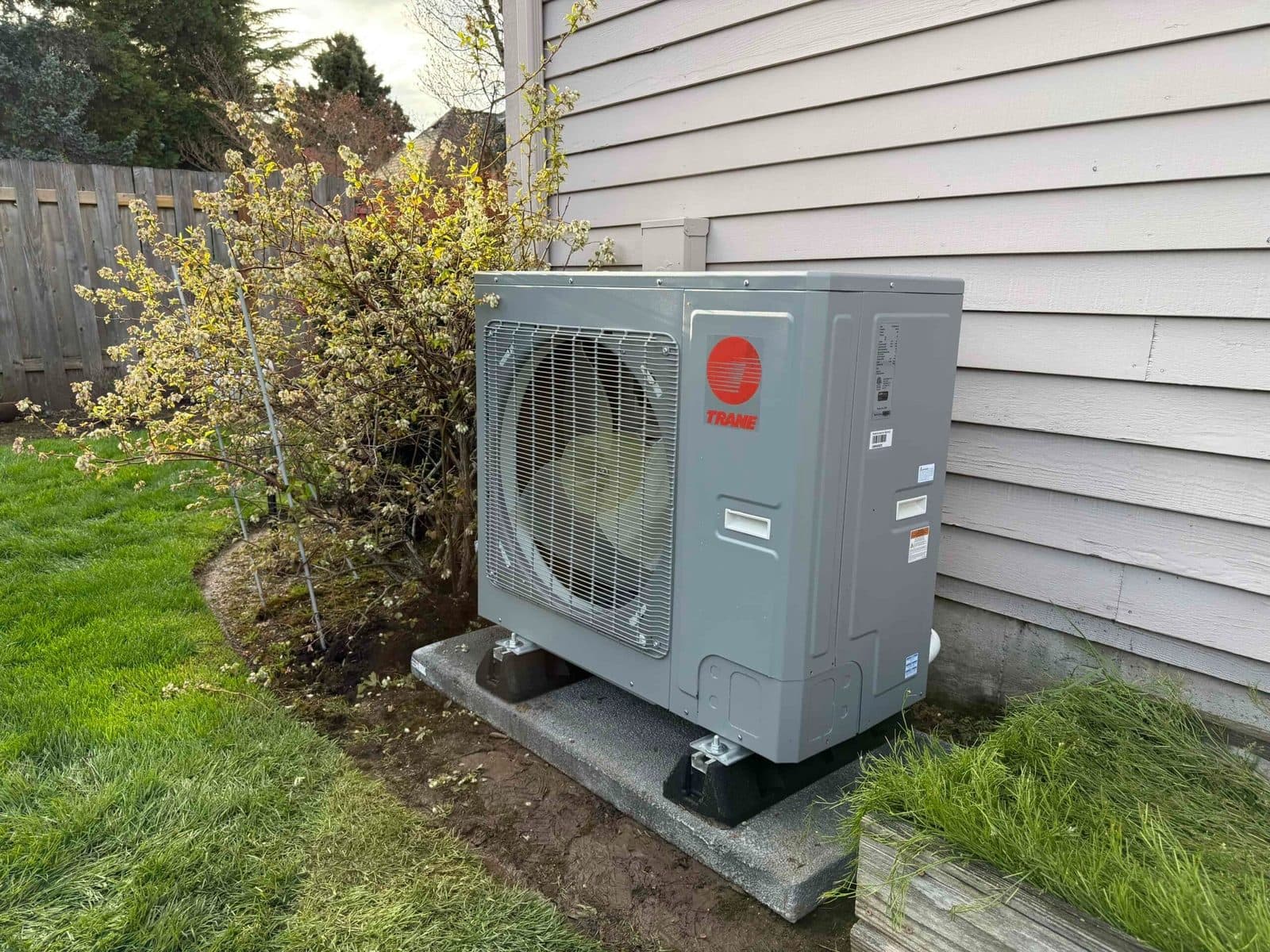
Portland climate action goals are nudging Oregon homeowners off gas, and rebate stacks make 2026 the best year in a decade to make the switch. Energy Trust of Oregon pays $1,500–$2,200 for qualifying heat pump installs. The federal Inflation Reduction Act added up to $2,000 in tax credits. Combined rebates and credits cut the out-of-pocket cost of a gas-to-heat-pump conversion by 25–40%. Cold-climate heat pumps (Mitsubishi Hyper-Heat, Daikin Fit) rated to -13°F handle Oregon winters without backup heat.
What a full Oregon HVAC replacement costs in 2026
Gas furnace replacement: $5,500–$9,500 installed. Central AC add-on or replacement: $6,000–$11,000. Variable-speed cold-climate heat pump (replaces both furnace and AC): $14,000–$22,000 before rebates; $10,500–$17,500 after Energy Trust + federal credits. Ductless mini-split (4-zone): $13,000–$18,000. Emergency same-day repair typically costs 20–30% more than scheduled work — yet another reason to replace proactively.
The bottom line
Oregon HVAC systems don't tell you they're dying — they tell you they're failing. Pay attention to the signs, schedule replacements during shoulder season, and always check Energy Trust of Oregon rebate eligibility before signing. A good licensed Oregon HVAC contractor will file your rebate paperwork for you as part of the standard install. HomeJobDone books Oregon HVAC assessments in under 24 hours, including a full load calculation, rebate eligibility check, and written quote.
Ready for a written quote?
Itemized, fixed-price, delivered in 24 hours. Oregon CCB licensed & bonded.